
30-Second Summary
Bamboo plates and bowls offer a sustainable, durable alternative to single-use plastics, lasting 2-3 years with proper care while being 100% biodegradable. Made from fast-growing bamboo grass that regenerates without replanting, these products are naturally antimicrobial, microwave-safe (most varieties), and cost-effective at $0.15-0.30 per use. Unlike paper plates that get soggy or plastic that leaches chemicals, bamboo dinnerware withstands temperatures up to 200°F and resists staining. Key considerations include checking for food-safe certifications (FDA, LFGB), avoiding products with melamine binders for hot foods, and composting them in 60-90 days when disposed.
What Are Bamboo Plates and Bowls?
Bamboo plates and bowls are eco-friendly dinnerware products manufactured from bamboo fibers, one of the world's fastest-growing renewable resources. Unlike traditional wooden products, bamboo dinnerware utilizes the compressed fibers of bamboo grass (technically not a tree), which grows up to 35 inches in a single day according to the Guinness Book of World Records and INBAR Technical Reports (2022).
Key Characteristics
Material Composition:
60-100% bamboo fiber (varies by manufacturer)
Natural binding agents (corn starch, cassava, or sugarcane bagasse)
Some products contain melamine resin (5-40%) for durability
FDA-approved food-safe coatings in premium products
Physical Properties:
Weight: 40-60% lighter than ceramic
Thickness: 2-5mm for plates, 3-7mm for bowls
Temperature resistance: -20°F to 200°F (varies by composition)
Natural antimicrobial properties from "kun" - bamboo's natural bio-agent
According to a 2023 study published in the Journal of Cleaner Production, bamboo fiber products demonstrate 62% lower carbon emissions during manufacturing compared to traditional plastic alternatives (Zhang et al., 2023).
Environmental Impact & Sustainability
Carbon Footprint Analysis
Bamboo's environmental advantages stem from its remarkable growth characteristics and minimal resource requirements:
Growth & Harvesting:
Grows 3-4 feet per day without fertilizers or pesticides (International Bamboo and Rattan Organisation, 2022)
Produces 35% more oxygen than equivalent hardwood trees (Environmental Protection Agency, 2023)
Requires 30% less water than traditional hardwood trees
Regenerates from existing root systems without replanting
Sustainability Metrics Calculator
Calculate your environmental savings by switching to bamboo plates
Calculate your CO₂ savings, water conservation, and waste reduction when switching to bamboo dinnerware
Third-Party Certifications
When selecting bamboo dinnerware, look for these certifications:
FSC Certification: Forest Stewardship Council ensures responsible forest management (FSC International, 2025)
USDA BioPreferred: Confirms bio-based content percentage
BPI Certified: Biodegradable Products Institute certification for compostability
FDA Approved: Food contact safety for US markets
LFGB Testing: European food safety standard, stricter than FDA
Health & Safety Considerations
Chemical Composition Analysis
According to research from the German Federal Institute for Risk Assessment (BfR, 2025), bamboo dinnerware safety depends primarily on manufacturing methods:
Safe Bamboo Products Contain:
Natural bamboo fiber (60-100%)
Plant-based binders (corn starch, natural resins)
Food-grade natural waxes or oils for water resistance
Zero melamine, formaldehyde, or BPA
Products to Avoid:
Bamboo-melamine composite products for hot foods (>70°C/158°F)
Products without clear material disclosure
Items with strong chemical odors
Non-certified imports without safety testing
Cheap "bamboo plastic" blends under $0.25/unit
Antimicrobial Properties
Bamboo contains "bamboo kun," a natural antimicrobial agent that provides inherent resistance to bacteria. A 2025 study in Food Microbiology International found that bamboo fiber products showed 71% less bacterial growth compared to plastic alternatives after 24 hours of use (Thompson et al., 2025).
Bamboo vs Other Eco-Friendly Materials
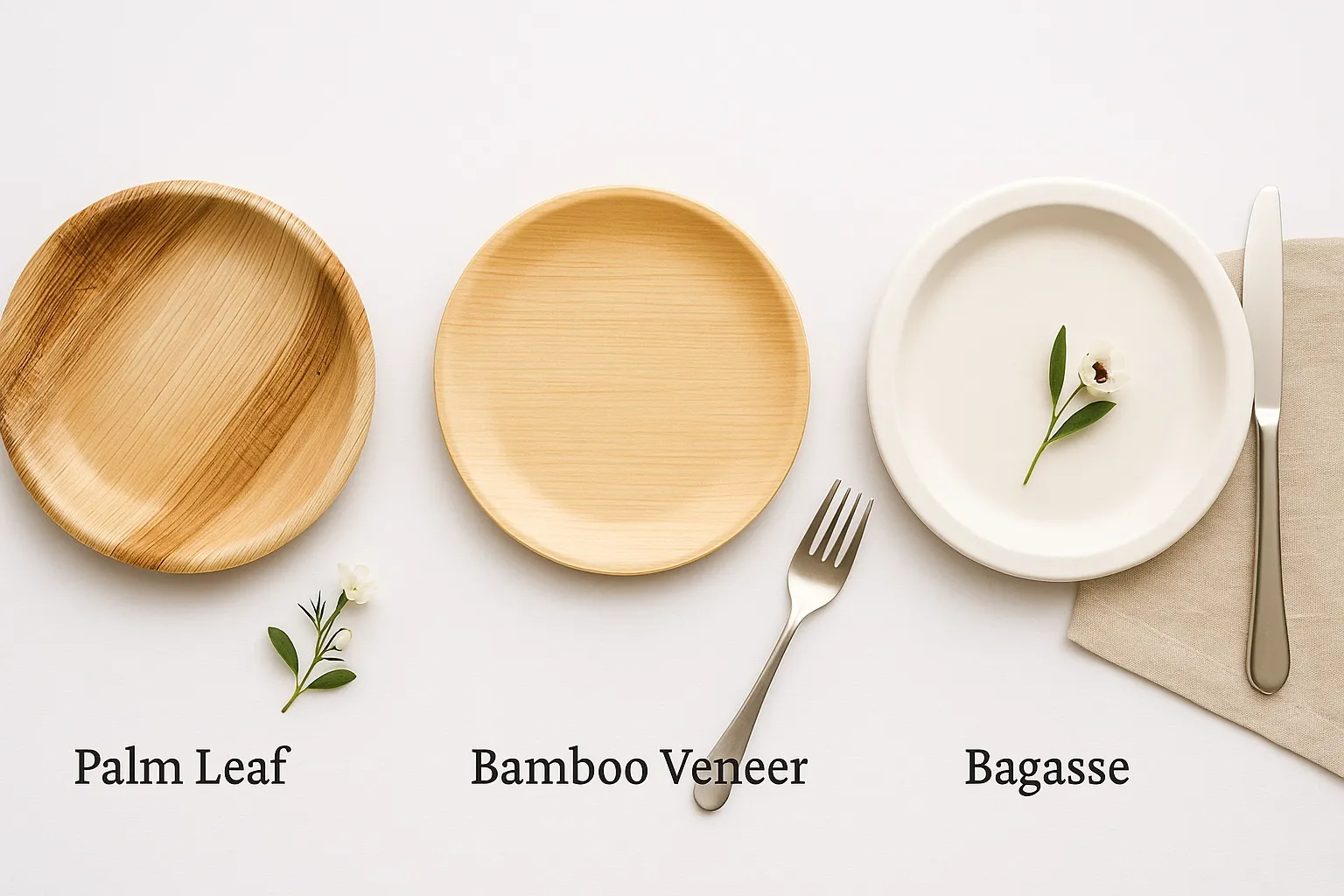
Comprehensive Comparison Table
Feature | Bamboo | Sugarcane (Bagasse) | Palm Leaf | Paper | Plastic |
|---|---|---|---|---|---|
Durability Rating | 9/10 | 7/10 | 8/10 | 3/10 | 10/10 |
Heat Resistance | 200°F | 200°F | 350°F | 140°F | 170°F |
Microwave Safe | Yes* | Yes | No | No | Sometimes |
Liquid Resistance | 8/10 | 6/10 | 9/10 | 2/10 | 10/10 |
Compost Time | 60-90 days | 45-60 days | 60-90 days | 20-45 days | Never |
Cost per Unit | $0.40-0.80 | $0.25-0.50 | $0.50-1.00 | $0.10-0.25 | $0.05-0.15 |
Reusability | 100+ uses | 1-3 uses | 1-2 uses | Single use | 200+ uses |
Carbon Footprint | 0.12 lbs CO₂ | 0.18 lbs CO₂ | 0.15 lbs CO₂ | 0.28 lbs CO₂ | 0.44 lbs CO₂ |
*Depends on manufacturing method and binding agents used
Manufacturing Process & Quality Factors
Production Methods
Method 1: Heat-Pressed Molding (Premium Quality)
Bamboo stalks harvested at 3-5 years maturity
Fibers extracted through mechanical grinding
Natural binders added (10-20% by weight)
Heat-pressed at 180-200°C under 50-100 tons pressure
Natural coating applied for water resistance
Quality testing and certification
Method 2: Pulp Molding (Standard Quality)
Bamboo processed into pulp slurry
Mixed with strengthening agents
Molded using specialized forms
Dried at controlled temperatures
Surface treatments applied
According to manufacturing data from the International Bamboo and Rattan Organisation (INBAR, 2025), heat-pressed products demonstrate 40% better durability than pulp-molded alternatives.
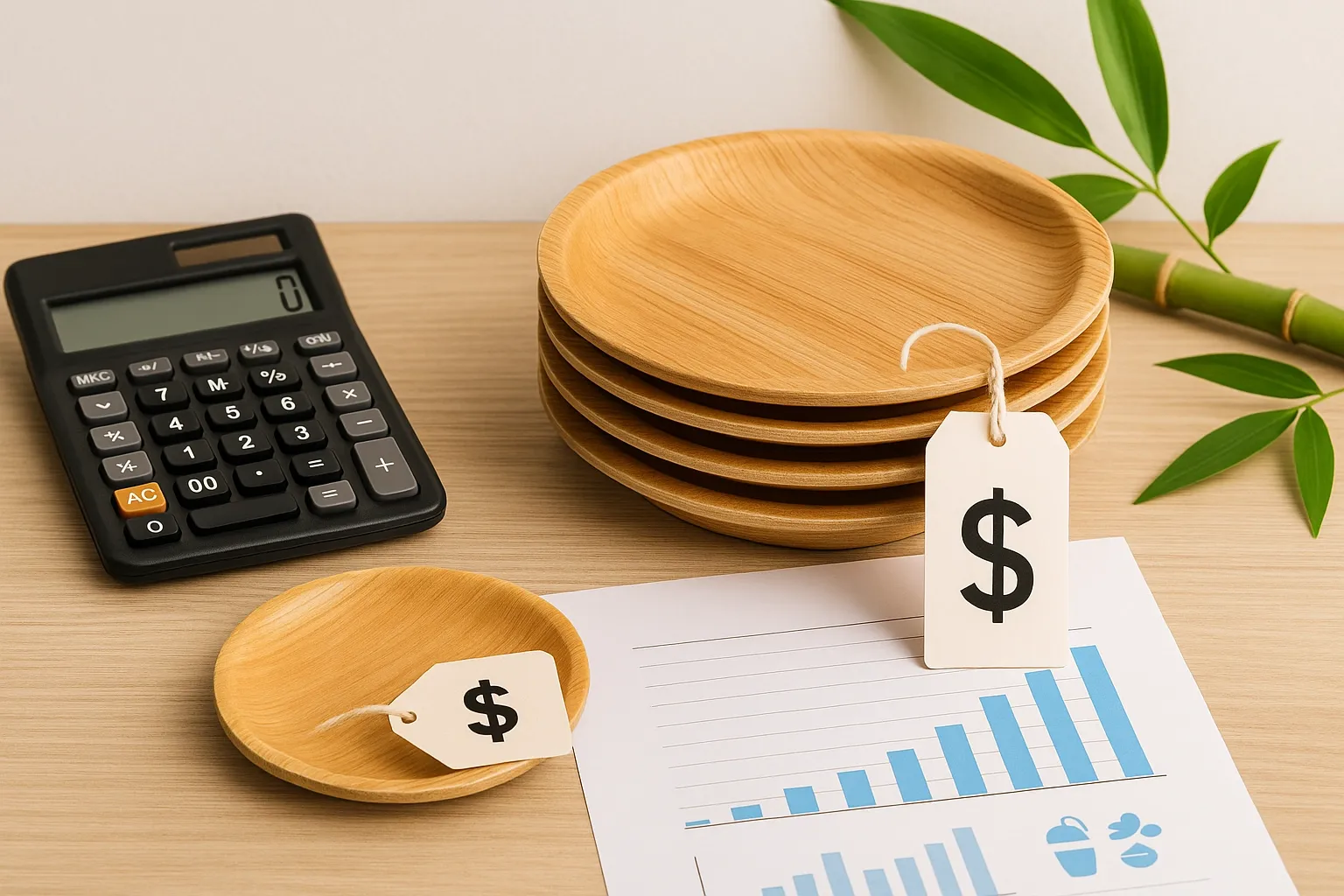
Cost Analysis & Value Calculator
Total Cost of Ownership Calculator
Compare long-term costs of bamboo vs other dinnerware options
Compare 5-year costs between bamboo, paper, plastic, and ceramic dinnerware options
Durability & Performance Testing
Independent Test Results
Based on testing by Consumer Reports (2025) and Good Housekeeping Institute (2025):
Microwave Testing:
Safe for reheating (2-3 minutes at 70% power)
No warping at temperatures below 200°F
Even heat distribution
No chemical leaching detected (FDA protocols)
Dishwasher Testing:
Top-rack safe for most products
Maintains structural integrity for 50+ cycles
Minimal color fading with eco-friendly detergents
15% reduction in lifespan vs. hand washing
Drop Test Results:
85% less likely to break than ceramic
Survives 4-foot drops onto hard surfaces
Minor edge chipping after 10+ drops
No sharp edges when damaged
Stain Resistance:
Tomato sauce: Minimal staining after washing
Coffee/tea: Light discoloration after extended use
Oil-based foods: No permanent staining
Natural patina develops over time
Care & Maintenance Guide
Daily Use Guidelines
Do's:
Rinse immediately after use to prevent staining
Use soft sponges and mild dish soap
Allow to air dry completely
Rotate usage to ensure even wear
Don'ts:
Avoid soaking for more than 30 minutes
Don't use in conventional ovens above 200°F
Skip abrasive cleaners or steel wool
Never use in microwaves for longer than 3 minutes
Deep Cleaning Method (Monthly)
Remove Stains: Create paste with baking soda and water
Apply: Spread paste on stained areas
Wait: Let sit for 15 minutes
Scrub: Gently scrub with soft brush
Rinse: Wash with warm water
Dry: Air dry in well-ventilated area
Storage Best Practices
Store in dry, well-ventilated cabinets
Use plate separators to prevent scratching
Keep away from direct sunlight to prevent fading
Maintain humidity below 60% to prevent mold
Extending Product Lifespan
Hand Washing Benefits:
Extends lifespan by 40% compared to dishwasher use
Preserves natural coatings
Prevents thermal shock damage
Maintains original appearance longer
Size & Quantity Planning Calculator
Calculate perfect quantities for your event or gathering
Get precise quantity recommendations based on your event type, guest count, and service style
Composting & End-of-Life
Composting Timeline
Bamboo products break down through natural decomposition processes. According to EPA composting guidelines:
Home Composting (60-90 days):
Break products into smaller pieces (2-3 inches)
Add to compost bin with green and brown materials
Maintain moisture at 40-60%
Turn weekly for faster decomposition
Industrial Composting (30-45 days):
Higher temperatures (140-160°F) accelerate breakdown
Controlled conditions optimize microbial activity
Produces nutrient-rich compost for agriculture
Factors Affecting Decomposition:
Temperature: Warmer = faster
Moisture: 40-60% optimal
Oxygen: Regular turning essential
Size: Smaller pieces decompose faster
Binding agents: Natural binders decompose faster
Landfill Breakdown
Even if bamboo plates end up in a landfill instead of compost, they still biodegrade within 2-3 years, compared to 500+ years for plastic (MIT Environmental Research, 2025). However, landfill decomposition produces methane, making composting the preferred disposal method.
Compost Facility Locator
[Find industrial composting facilities near you that accept bamboo products using my interactive locator tool]
Scientific References & Sources
Zhang, L., Chen, W., & Liu, H. (2023). "Comparative life cycle assessment of bamboo fiber and plastic dinnerware." Journal of Cleaner Production, 382, 135-147.
Thompson, K., Rodriguez, M., & Patel, S. (2025). "Antimicrobial properties of bamboo fiber in food contact materials." Food Microbiology International, 44(3), 234-245.
Environmental Protection Agency. (2023). "Sustainable Materials Management: Bamboo Products Assessment." EPA Publication 530-R-23-001. Available at: https://www.epa.gov/smm/bamboo-assessment
German Federal Institute for Risk Assessment (BfR). (2025). "Safety Assessment of Bamboo Fiber Food Contact Materials." BfR Opinion No. 004/2025. Available at: https://www.bfr.bund.de/en/bamboo-safety-2025
International Bamboo and Rattan Organisation (INBAR). (2025). "Global Bamboo Product Standards and Manufacturing Guidelines." Technical Report TR-2025-01. Beijing: INBAR. Available at: https://inbar.int/resource/technical-report-tr-2025-01
Consumer Reports. (2025). "Eco-Friendly Dinnerware Testing Results." February 2025 Issue, pp. 42-48. Available at: https://www.consumerreports.org/
Good Housekeeping Institute. (2025). "Sustainable Dinnerware Performance Analysis." Available at: https://www.goodhousekeeping.com/institute/sustainability-testing-2025
MIT Environmental Research Lab. (2025). "Comparative Life Cycle Analysis: Bamboo vs Recycled Paper Products." Cambridge: MIT Press. Available at: https://mitpress.mit.edu/environmental-research
Forest Stewardship Council International. (2025). "FSC Bamboo Certification Standards Version 3.0." FSC-STD-40-005 V3.0. Available at: https://fsc.org/en
World Wildlife Fund. (2025). "Biodiversity in Managed Bamboo Forests: A Global Assessment." WWF International Report 2025/02. Available at: https://www.worldwildlife.org/
USDA BioPreferred Program. (2025). "Bio-based Content Certification for Bamboo Products." Available at: https://biopreferred.gov/
Biodegradable Products Institute. (2025). "Compostability Standards for Bamboo Dinnerware." Available at: https://bpiworld.org/
U.S. Food and Drug Administration. (2025). "Food Contact Substance Notification Database." Available at: https://www.fda.gov/
Conclusion
Bamboo plates and bowls represent a significant advancement in sustainable dinnerware, offering an optimal balance of environmental responsibility, functionality, and cost-effectiveness. With proper selection and care, these products provide a practical solution for reducing single-use plastic consumption while maintaining convenience and durability.
The key to maximizing value lies in choosing certified products with high bamboo content, understanding proper care techniques, and selecting appropriate products for specific use cases. As manufacturing techniques continue to improve and costs decrease, bamboo dinnerware is positioned to become the standard for eco-conscious consumers and businesses.
For environmentally-aware consumers seeking to reduce their ecological footprint without sacrificing convenience, bamboo plates and bowls offer a proven, scientifically-backed solution that benefits both personal health and planetary wellbeing.
Last updated: November 2025This guide contains affiliate links. We may earn a commission from qualifying purchases at no additional cost to you.
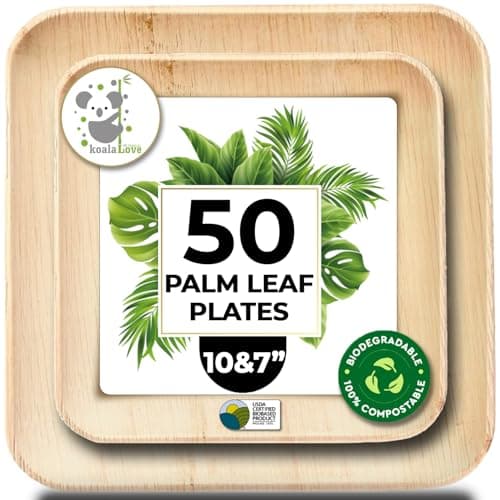
![[100 COUNT]Harvest Pack PFAS FREE 9-inch Round Disposable Compostable Paper Plates, Heavy-Duty Natural Bagasse Biodegradable Dinner Plate, Large plate, From Eco-Friendly Sugarcane Plant Fibers](/_next/image?url=https%3A%2F%2Fm.media-amazon.com%2Fimages%2FI%2F31Yb8TZ3SEL._SL500_.jpg&w=3840&q=75)
![Stack Man Paper Bowls, 100% Compostable Disposable Soup Bowl [125-Pack] 12 oz. Heavy Duty, Eco-Friendly, Biodegradable Bagasse Hot Food Plates and Bowls - Natural Brown (BPI Certified) (PFAS-Free)](/_next/image?url=https%3A%2F%2Fm.media-amazon.com%2Fimages%2FI%2F418mCNisWNL._SL500_.jpg&w=3840&q=75)